
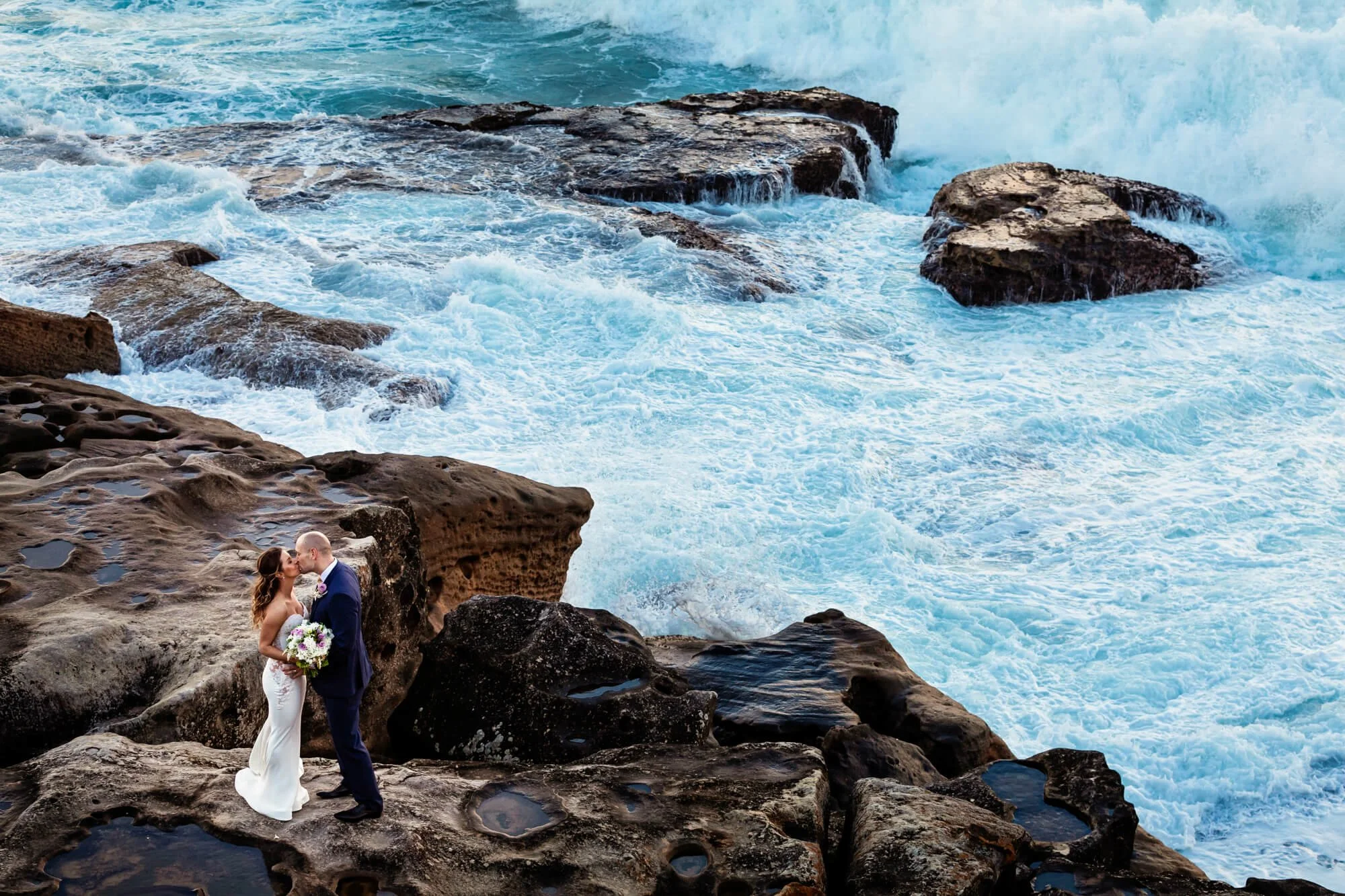
Beach Wedding
Guide
Planning a Beach Wedding?
Things to Consider Before Saying “I Do”
There is something undeniably romantic about a beach wedding. The sound of the waves, sand beneath your feet, a gentle coastal breeze and an endless ocean as your backdrop can create a wedding that feels relaxed, intimate and completely connected to nature.
But while a beach wedding can look effortless, there is a little more planning involved than simply choosing a beautiful stretch of sand. From weather and tides to your wedding dress, guest comfort, permits and the timing of your photographs, there are several things worth considering before you decide to say “I do” by the sea.
If you're dreaming of a beach wedding in Australia, here are some of the things we recommend thinking about before you book your ceremony.
01/ Is a beach wedding right for you?
A beach wedding is perfect for couples who love the outdoors and want their wedding day to feel relaxed rather than overly formal. One of the biggest advantages of getting married on the beach is that the natural surroundings do much of the decorating for you. You don't necessarily need elaborate styling when you already have the ocean, sand, headlands, cliffs or surrounding bushland as your backdrop.
Beach weddings can also work beautifully for a range of wedding styles, from intimate elopements and small ceremonies to larger celebrations followed by a reception at a nearby venue.
However, it is worth remembering that a beach is a natural environment. Unlike an indoor wedding venue, you cannot control the wind, temperature, rain, tides or what is happening around you.
And that's part of the beauty of a coastal wedding—but it is something you need to plan for.
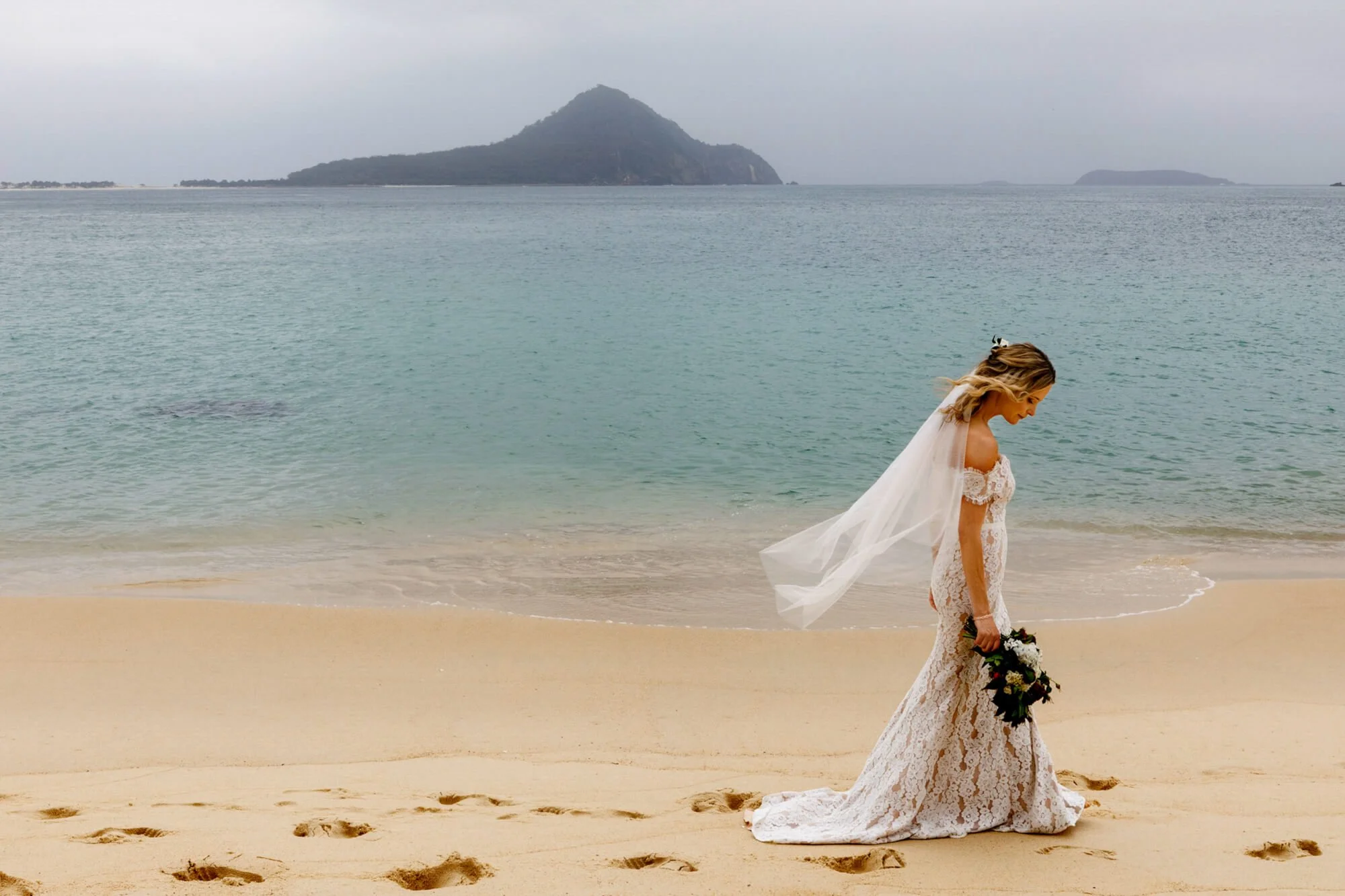
02/ Consider the weather
Weather is probably the biggest consideration when planning a beach wedding. Even on a beautiful summer's day, coastal conditions can change quickly. Wind can become a factor, temperatures can rise, and rain can appear when you least expect it.
Think about:
What will you do if it rains?
Is there a nearby indoor location?
Will there be shade for your guests?
Could strong winds affect your ceremony setup?
Will elderly guests or young children be comfortable?
Do you need umbrellas, fans, blankets or additional seating?
Having a wet-weather or extreme-weather plan doesn't mean you expect something to go wrong. It simply means you can relax knowing that you have considered the possibilities.
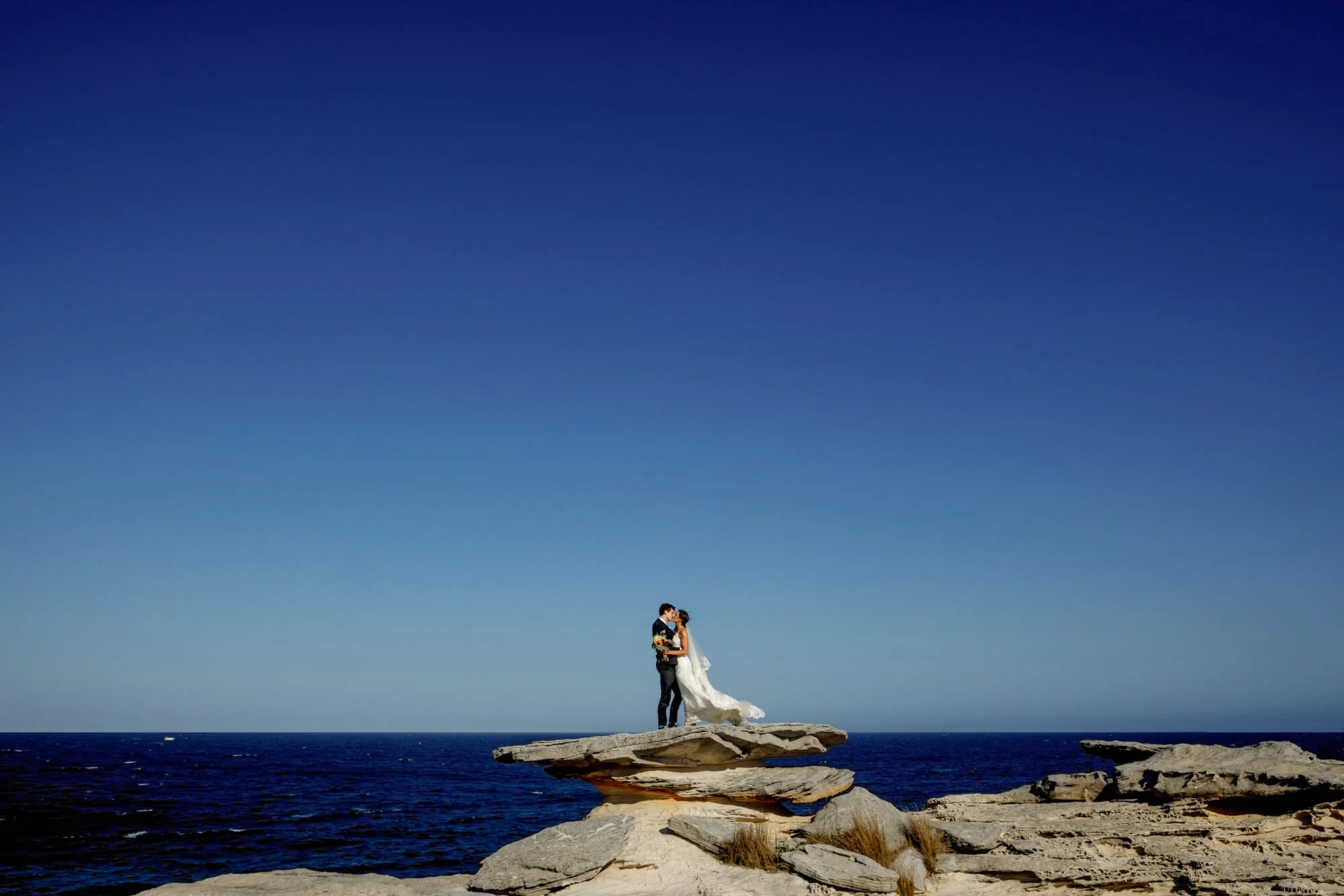
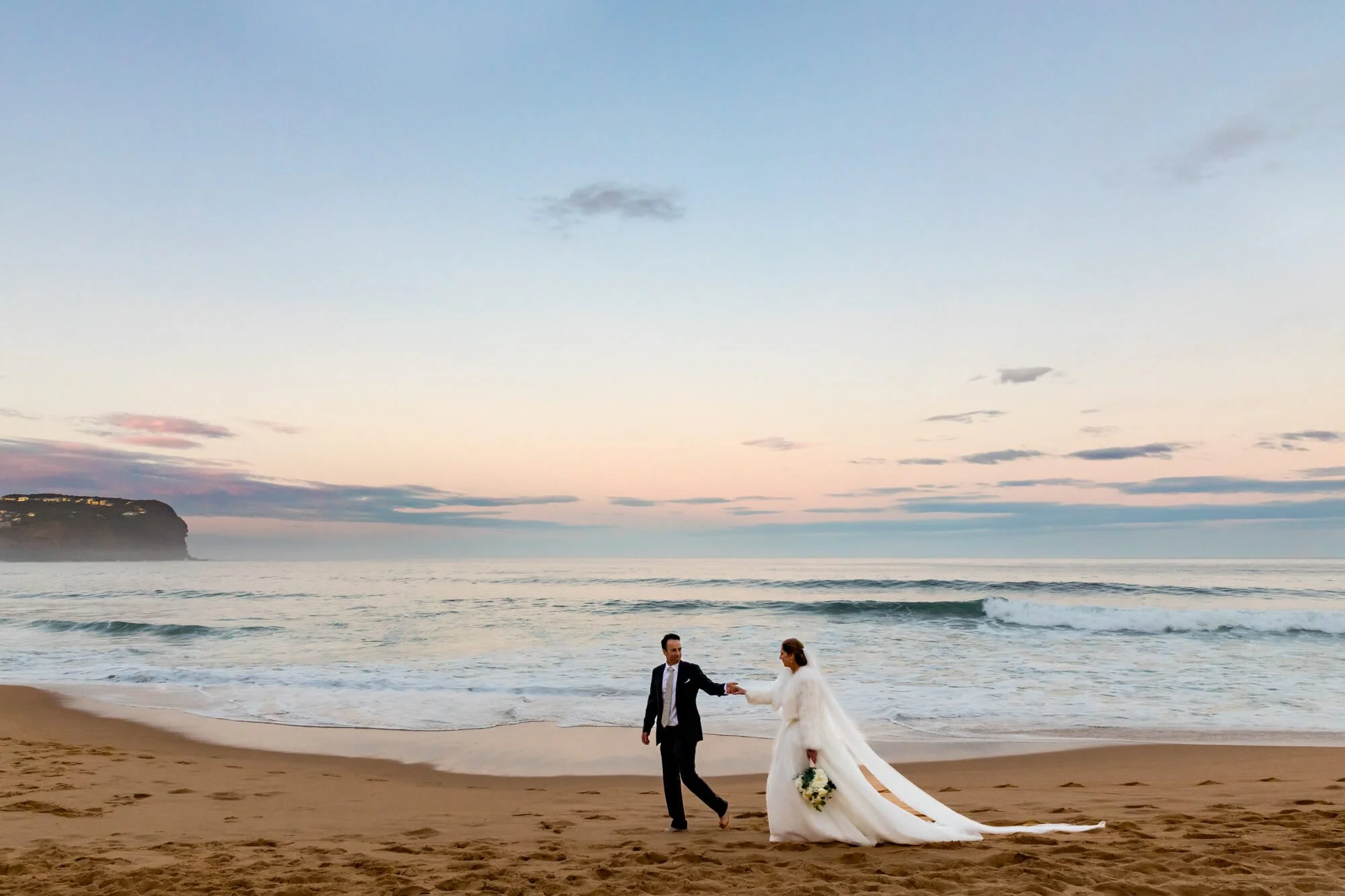
A beach wedding is perfect for couples who love the outdoors and want their wedding day to feel relaxed rather than overly formal.
03/ Choose the right time of day
The time of your beach ceremony can make a huge difference—not only to how comfortable you and your guests are, but also to your wedding photographs.
The middle of the day can bring strong overhead sunlight, harsh shadows and high temperatures. Depending on the location, there may also be very little natural shade.
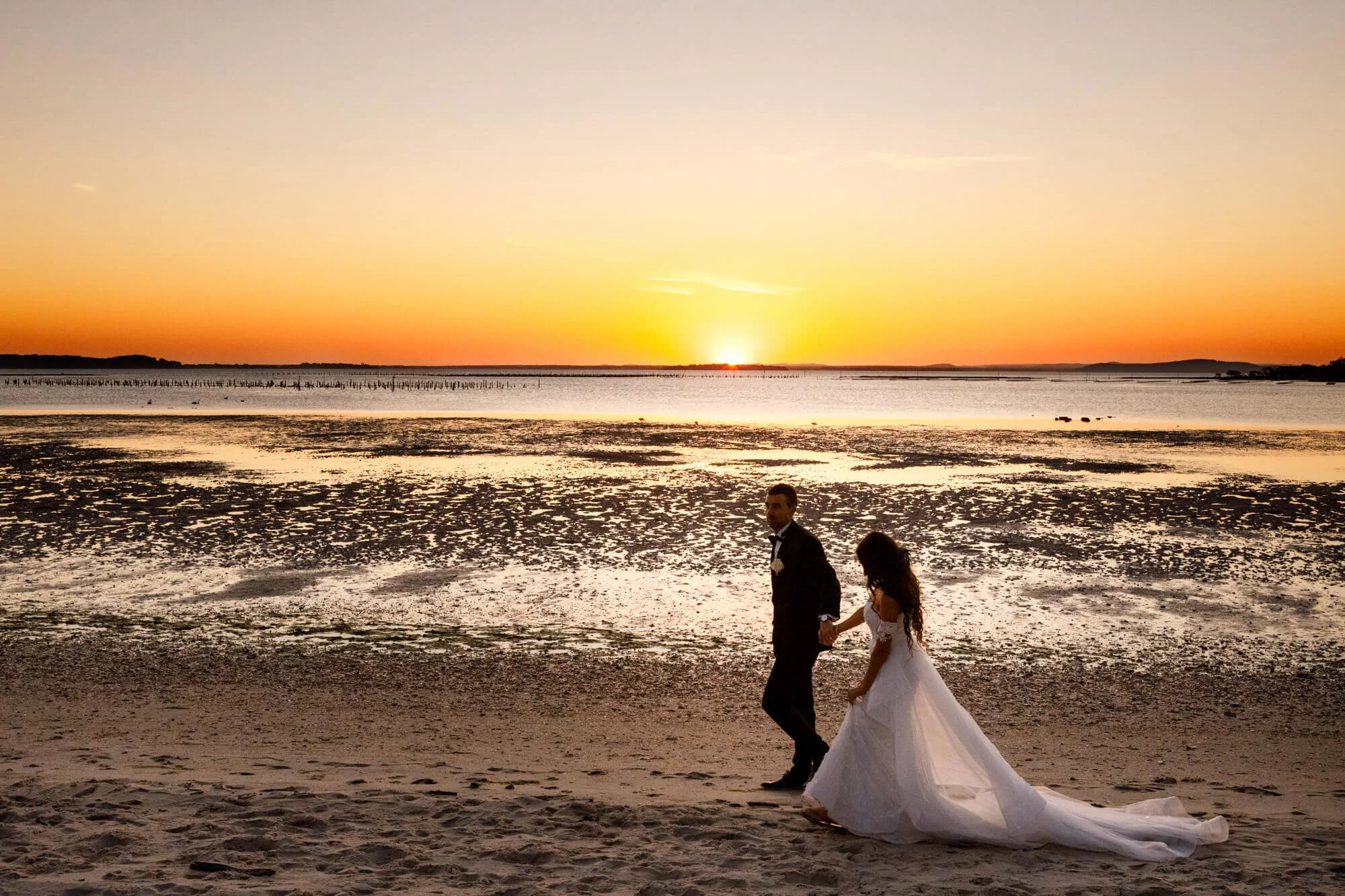
Later in the afternoon, the light becomes softer and warmer, creating a beautiful atmosphere for both the ceremony and your portraits.
And if you're dreaming of those romantic sunset beach wedding photographs, make sure your wedding timeline allows enough time to enjoy them rather than squeezing everything into the final few minutes of daylight.
The sun doesn't necessarily set directly over the ocean either. The position of the sun changes depending on the beach, the season and the direction you're facing, so your photographer can help you work out the best timing and location for your photographs.
04/ Don't forget about the wind, sand and your dress
A beach is beautiful—but it is still a beach!
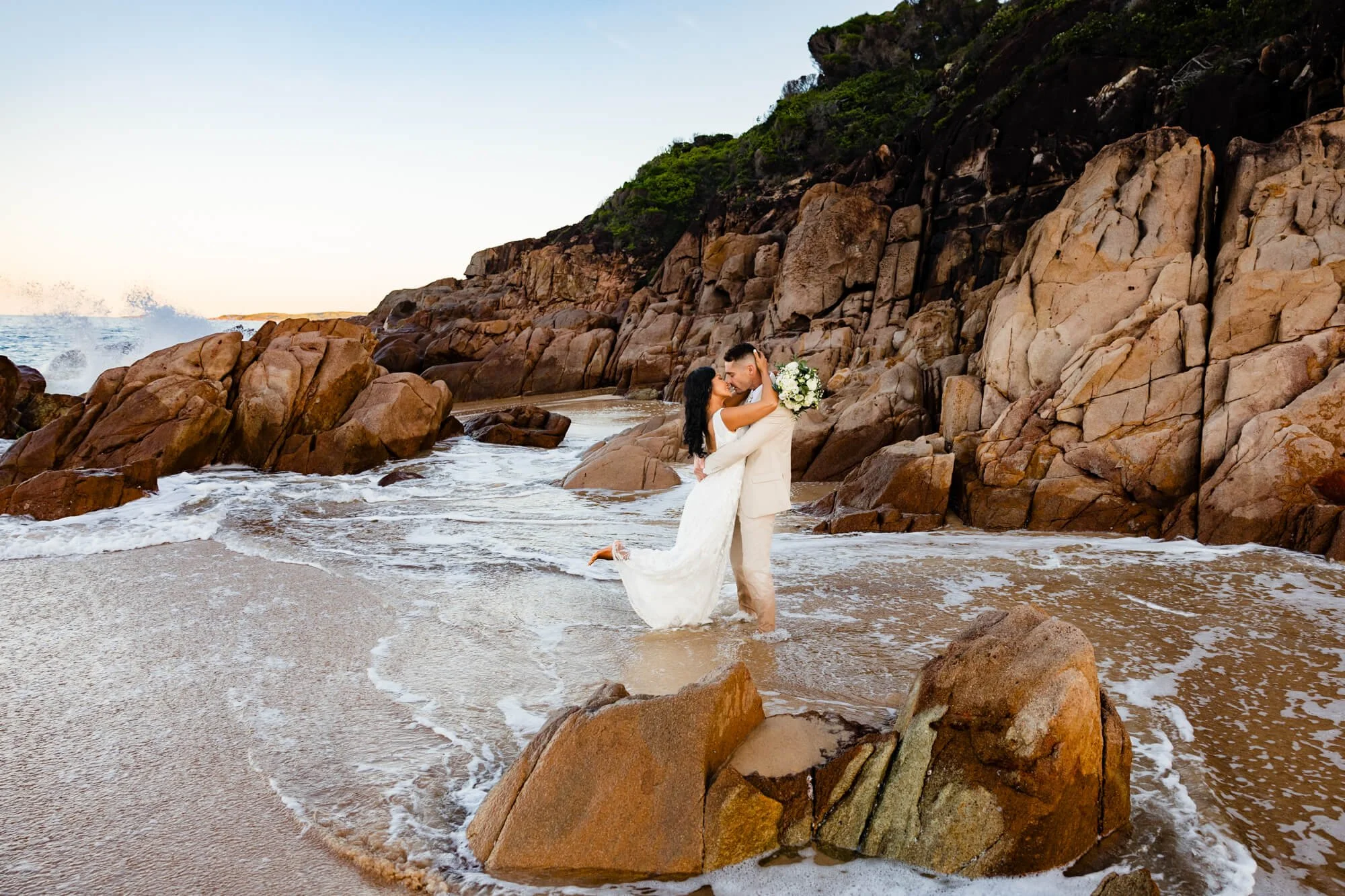
Wind can be particularly important when choosing your wedding dress, veil and hairstyle. A long veil can create spectacular movement in photographs, but strong coastal winds can also have a mind of their own.
You may want to think about:
Wearing comfortable shoes or going barefoot
Choosing a dress that you don't mind getting a little sandy
Having a second pair of shoes for photographs
Keeping your veil secure until you're ready for photographs
Choosing hairstyles that can cope with a little coastal breeze
And don't worry too much about getting sand on your dress. Some of our favourite beach photographs happen when couples forget about keeping everything perfectly pristine and simply enjoy the moment.
05/ Think about your guests
Consider the age and mobility of the people attending your wedding. Walking across soft sand can be difficult for some guests, particularly older family members or anyone with mobility issues.
You should also think about:
Seating
Shade
Sunscreen
Drinking water
Toilets
Parking
How far guests need to walk
Accessibility from the car park to the ceremony location
For some couples, the perfect compromise is having the ceremony near the beach rather than directly on the sand. You can still have the ocean as your backdrop without asking everyone to walk across a beach.
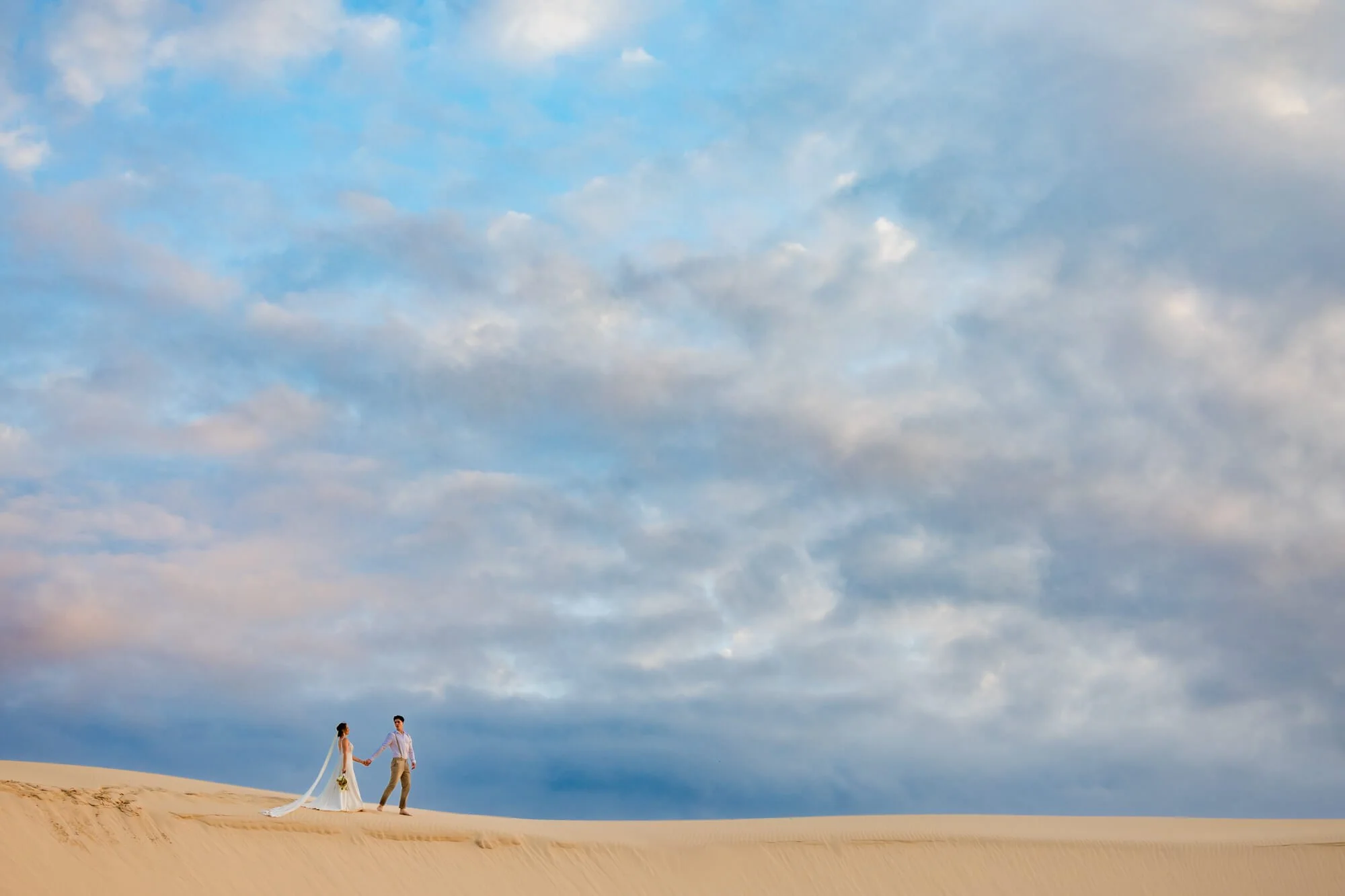
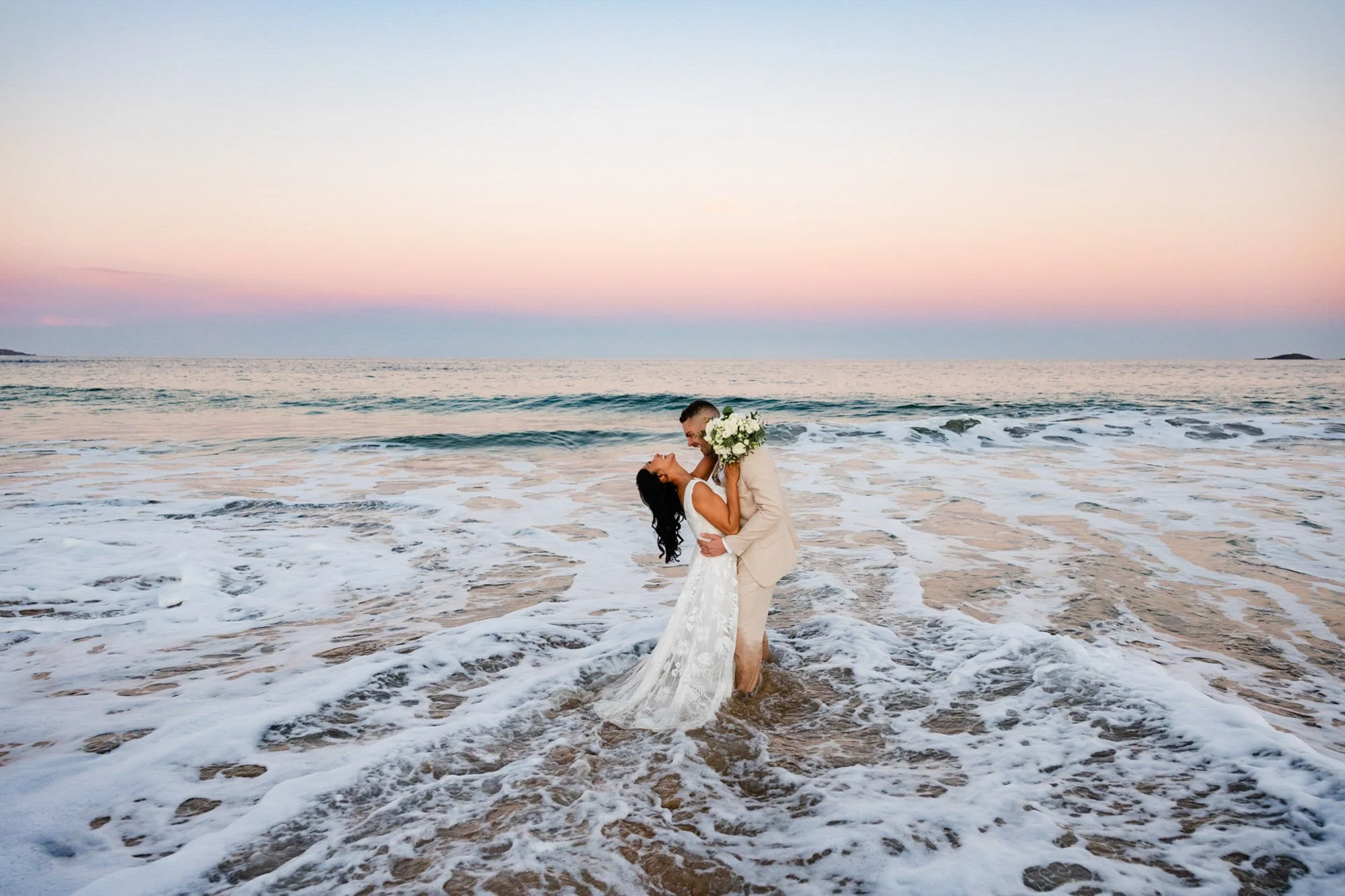
Some of our favourite beach photographs happen when couples forget about keeping everything perfectly pristine and simply enjoy the moment.
06/ Wedding Photography on the beach!
One of the biggest advantages of a beach wedding is the variety of photographs you can create without needing to travel far.
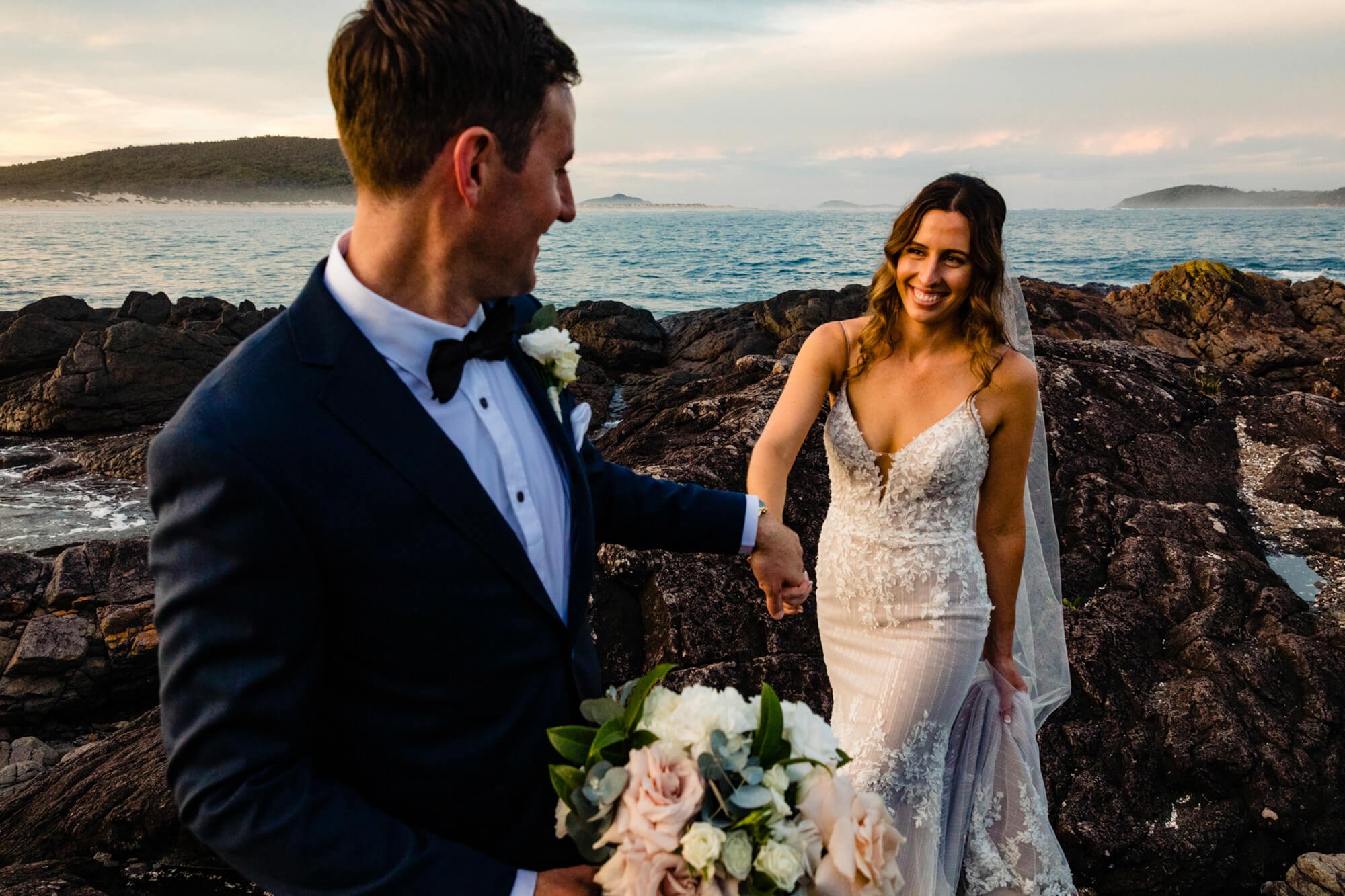
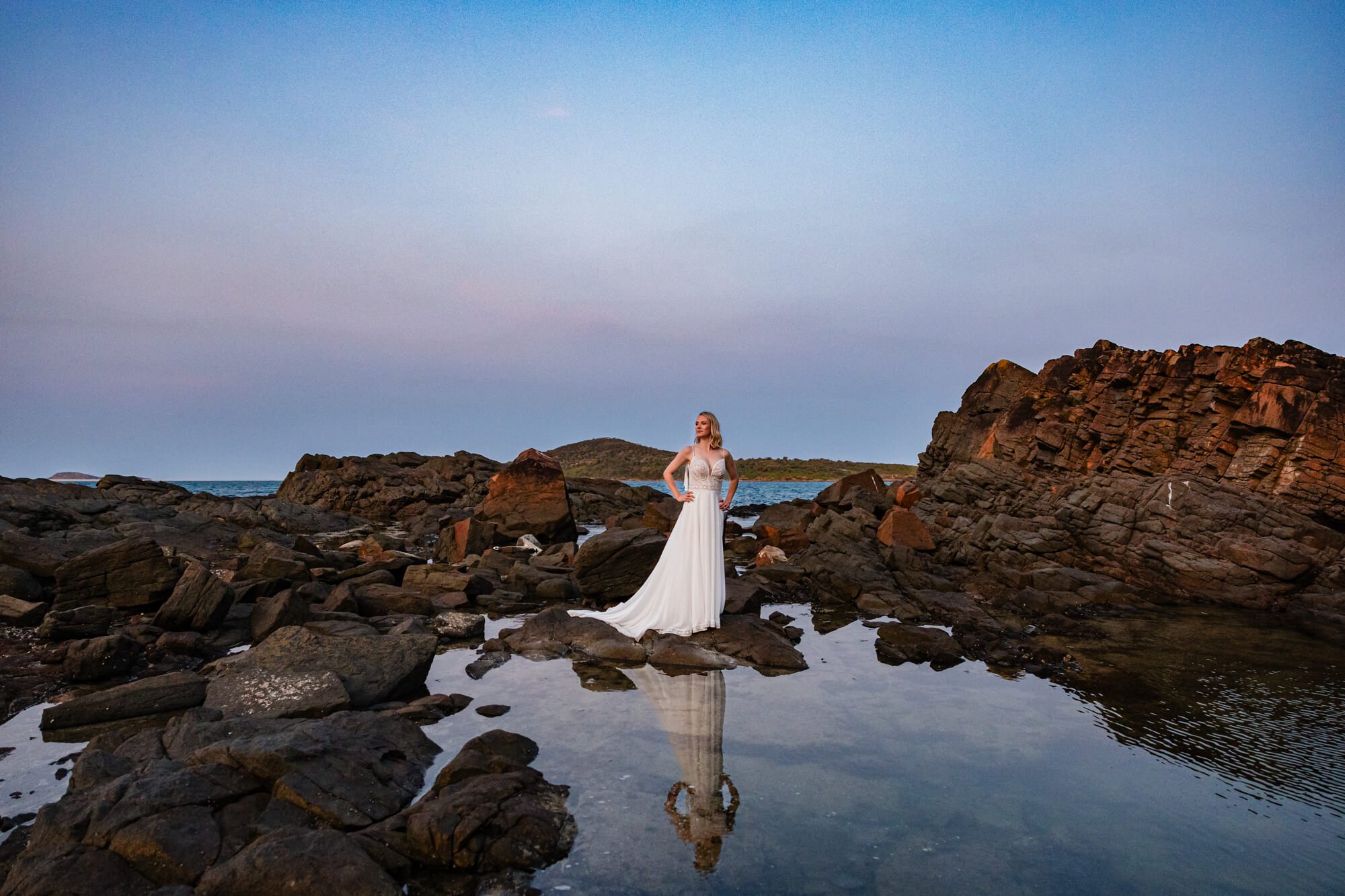
The beach itself can give you beautiful wide photographs, while nearby rocks, headlands, dunes, bushland and coastal paths can provide completely different backgrounds.
This is where choosing the right location—and the right time of day—really matters.
A beach that looks beautiful at midday may look completely different at sunset.
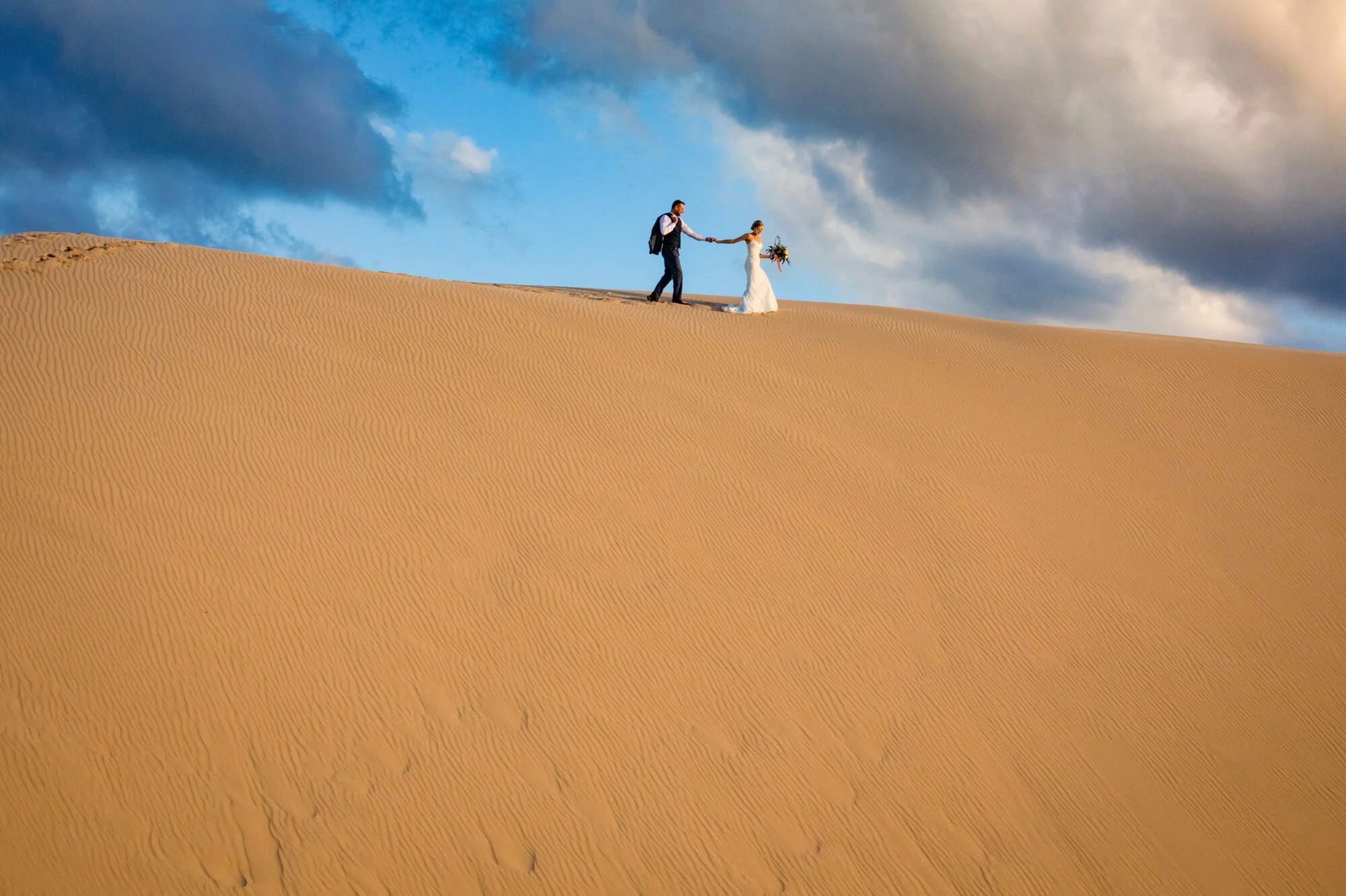
For example, Birubi Beach in Port Stephens combines the ocean with the expansive Stockton Sand Dunes, creating an incredible landscape for wedding photographs. The dunes, open beach and changing sunset light can give your photographs a sense of scale and movement.
We also love locations where you can move between different environments without spending a large part of your wedding day travelling.
05/ Check permits and local requirements
Different councils and locations have different requirements around wedding ceremonies, permits, decorations, structures and the number of people allowed.
For example, Port Stephens has specific requirements for wedding ceremonies held on beaches and public reserves. Some locations may also have restrictions around how long you can use the space and what can be set up.
Always check with the relevant council or land manager before making your plans.
This is especially important if you're bringing chairs, arbors, decorations, musicians or other suppliers onto a public beaches.
07/ Don't underestimate golden hour
The softer light later in the day can be particularly beautiful against the ocean, especially when combined with movement from the waves, sand and wind.
You don't necessarily need to spend an hour away from your guests either.
Even 15–20 minutes together at the right time can give you a completely different set of photographs from those taken earlier in the day.
And if you love dramatic photographs, stay a little longer.
Some of our favourite beach photographs happen after sunset, when the sky begins to change colour and the landscape takes on a completely different mood.
Get in Touch
We’d love to hear about your wedding! To check our availability and to receive our wedding collections, please fill in the form or alternatively, call 0405 666 260 or email info@fvidalphotography.com.au